The Strength of the Few
In The Strength of the Few, James Islington expands the Hierarchy series into a sweeping multi-world adventure filled with rich worldbuilding, emotional character arcs, and high-stakes revelations. Here’s my full review of this unforgettable sequel.
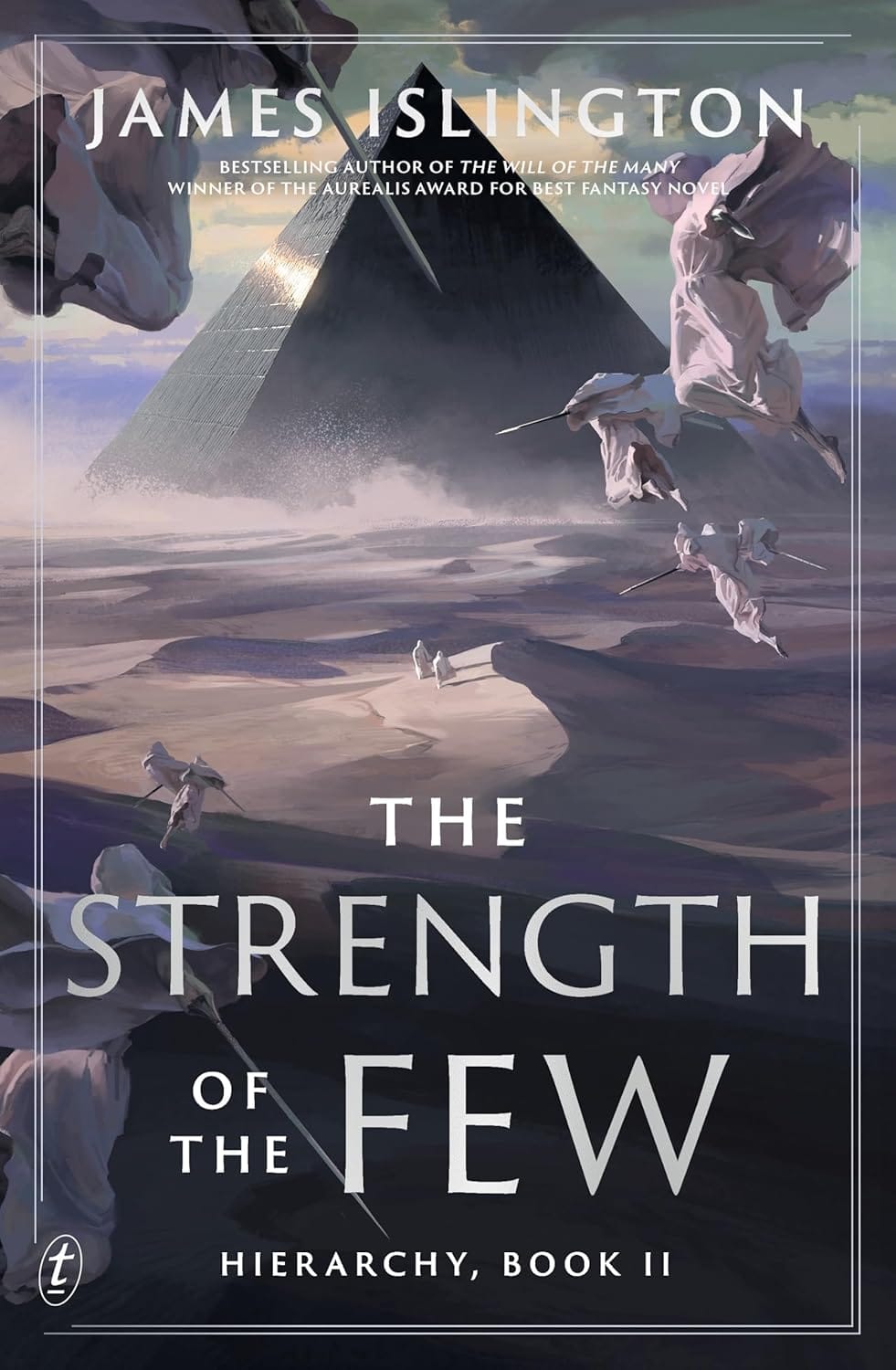
Author: James Islington
Series: Hierarchy (Book 2)
Release Date: November 11, 2025
Genre: Epic Fantasy
Rating: ★ ★ ★ ★ ★ (5/5)
Synopsis
This highly anticipated follow-up to The Will of the Many—one of 2023’s most lauded and bestselling fantasy novels—follows Vis as he grapples with a dangerous secret that could change the course of history across alternate dimensions.
OMNE TRIUM PERFECTUM.
The Hierarchy still call me Vis Telimus. Still hail me as Catenicus. They still, as one, believe they know who I am.
But with all that has happened—with what I fear is coming—I am not sure it matters anymore.
I am no longer one. I won the Iudicium, and lost everything—and now, impossibly, the ancient device beyond the Labyrinth has replicated me across three separate worlds. A different version of myself in each of Obiteum, Luceum, and Res. Three different bodies, three different lives. I have to hide; fight; play politics. I have to train; trust; lie. I have to kill; heal; prove myself again, and again, and again.
I am loved, and hated, and entirely alone.
Above all, though, I need to find answers before it’s too late. To understand the nature of what has happened to me, and why.
I need to find a way to stop the coming Cataclysm, because if all I have learned is true, I may be the only one who can.
Book Review: The Strength of the Few by James Islington
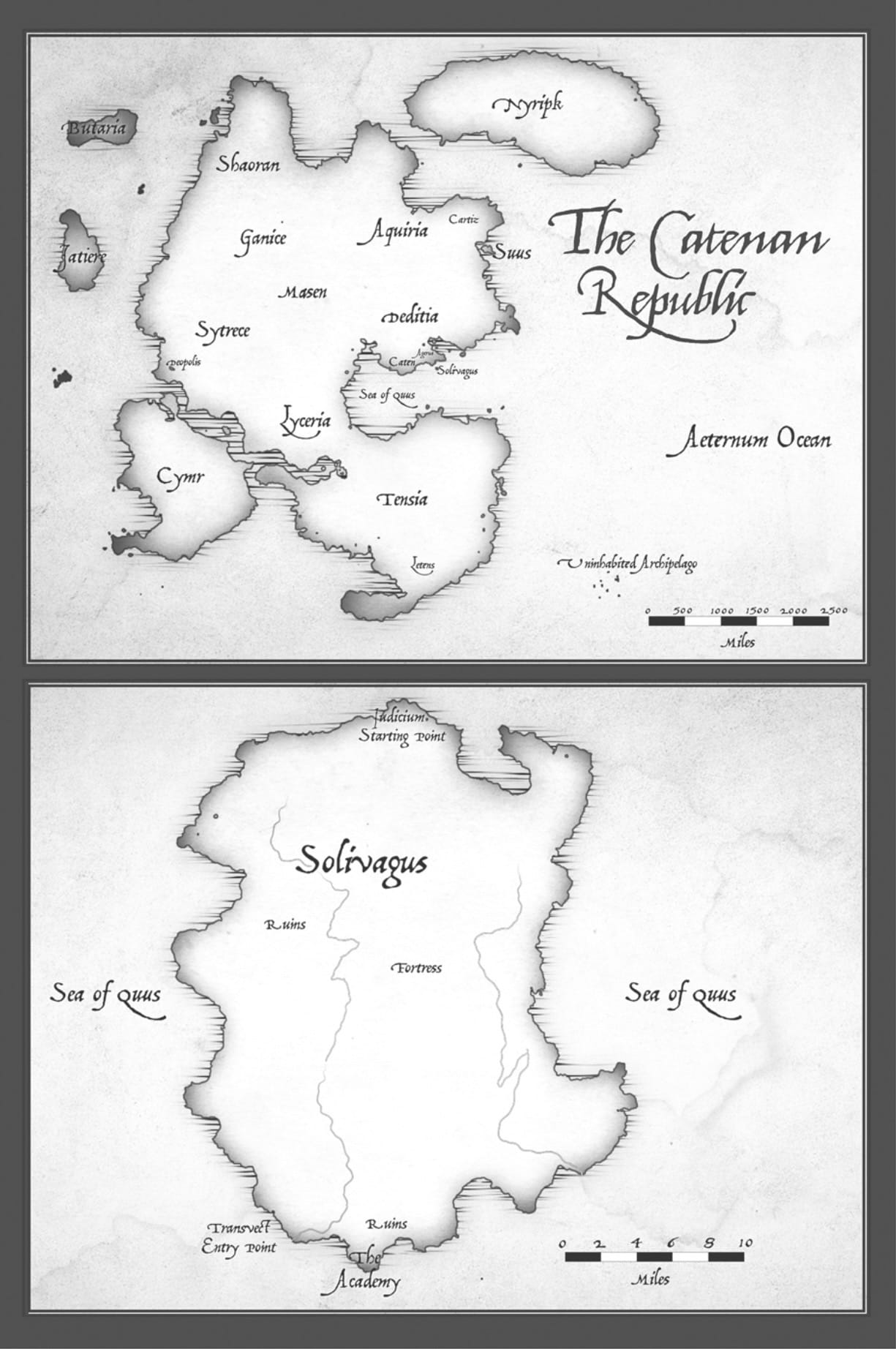
James Islington expands his already ambitious world in The Strength of the Few, taking everything established in The Will of the Many and pushing it onto a staggering multi-world scale. What began within the boundaries of Solivagus and Caten now stretches across three parallel versions of the Catenan Republic - Res, Obiteum, and Luceum - each shaped by the mysterious event known as the Rending. Because Vis has achieved Synchronism, we finally get to explore these worlds in depth, with the story alternating between them chapter by chapter, marked by distinct symbols inspired by Greco-Roman, Celtic, and Egyptian cultures. It’s a clever motif that also hints at the architectural, linguistic, and cultural influences embedded into each world.
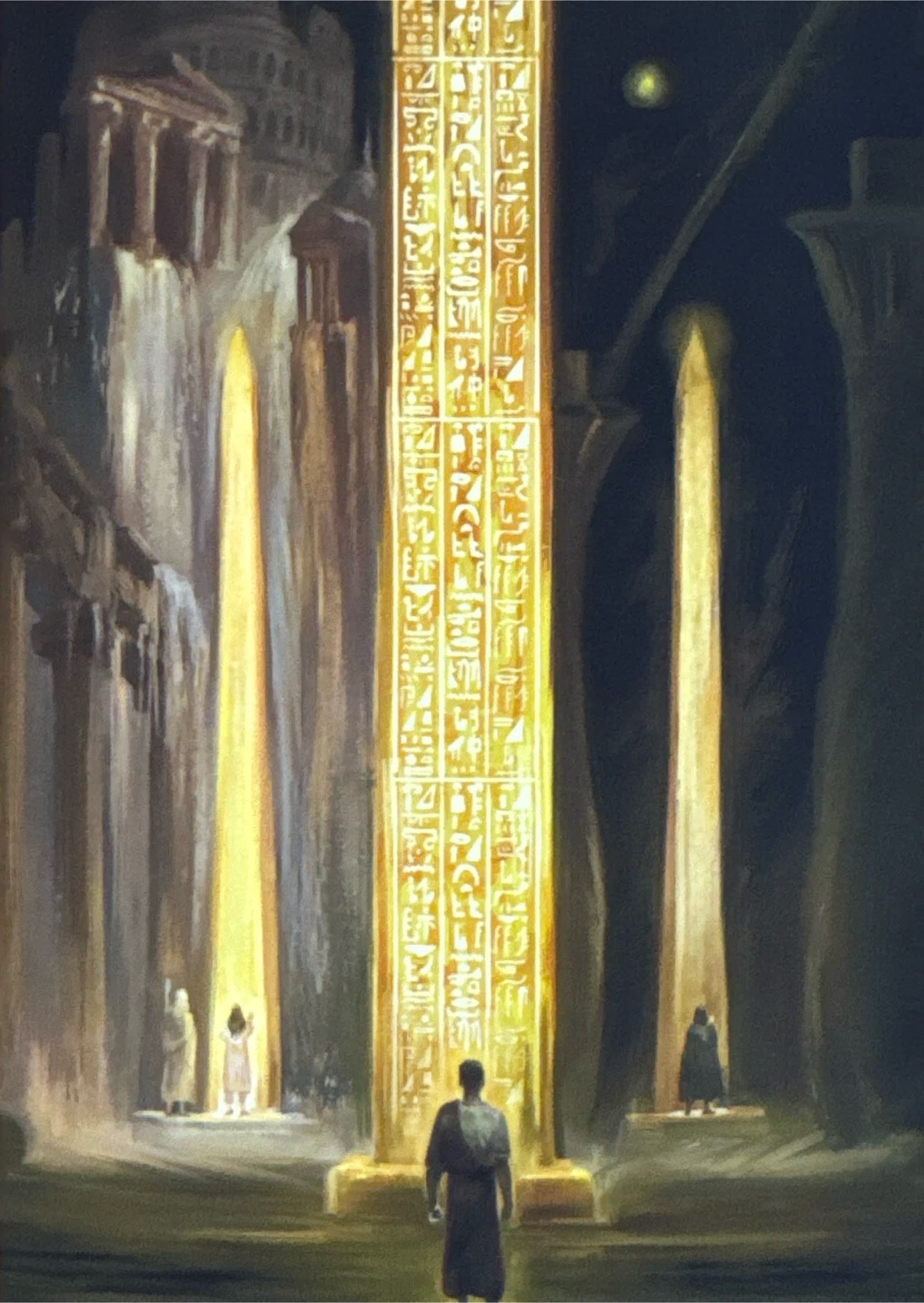
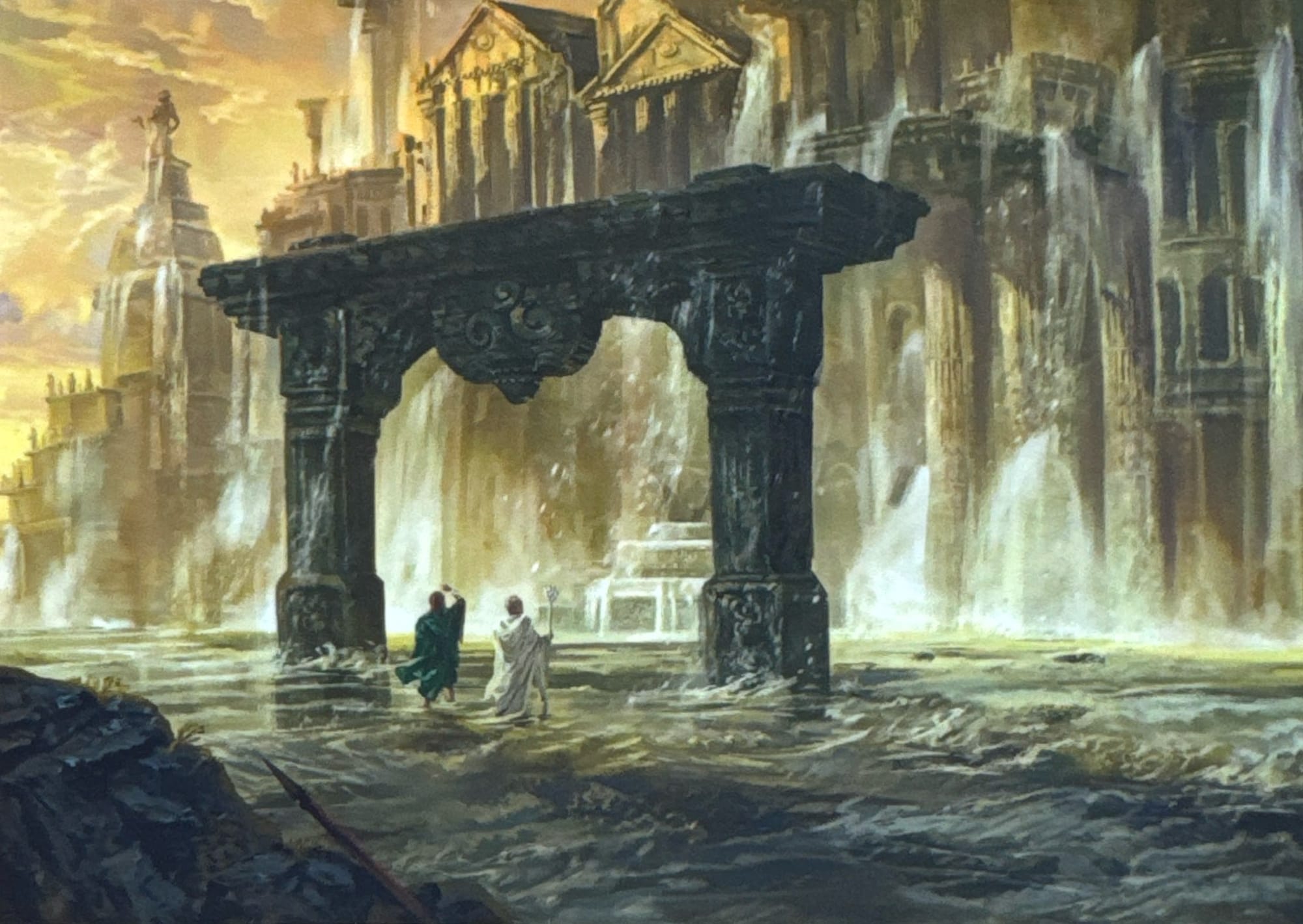
The sense of place is one of this book’s greatest triumphs. Each world feels fully realized and atmospheric, from the haunting desolation of Obiteum to the dignified minimalism of Luceum and the grand, hybrid civilization of Res. I found myself constantly wishing I were an artist just to paint these locations from my imagination. Thankfully, special editions, especially from The Broken Binding, include some gorgeous artwork, and I even bought extra prints from INPRNT because I wanted more.
Magic System & World Lore
This book also deepens our understanding of Will. In the first book, Vis refused to use Will at all. Here, we finally watch him learn, experiment, and push its boundaries. What’s fascinating is that Will manifests differently in each world:
- Luceum restricts it to druids/draoi and warriors who undergo the nasceann.
- Obiteum uses it to control the dead (the iunctii) and imbue objects.
- Res maintains the broadest, most complex use of Will, reserved for the highest echelons of the Hierarchy.
I’ll admit that I don’t obsess over the exact intricacies of the magic system. What mattered to me was understanding its character: honorable in Luceum, morbid in Obiteum, and wide-ranging (almost brutally so) in Res. And just when I thought I got a grasp on it, the book introduces the Cascade, one of the coolest powers yet. There’s still so much mystery surrounding the Concurrence, the limits of Synchronism, and the significance of items like Caeror’s torc. I can’t wait to see these expanded in the final book.
Plot & Pacing
At the heart of the novel is the looming Cataclysm – a cyclical, civilization-ending disaster linked to the Aurora Columnae. Only someone Synchronous can hope to stop it. This premise sets up a narrative spanning all three worlds, following three different versions of Vis as they grapple with their own challenges while inching closer to (or further from) preventing catastrophe.
With 80 chapters, the book is long, but it rarely feels slow. The constant switching between worlds keeps momentum high, though at times I wished the chapters were longer because I would just become absorbed in one setting before being thrown into another.
Among the three threads, Res fell below my expectations. I anticipated more political intrigue in the Senate, more navigating power structures, but events escalated quickly into civil war. Obiteum, by contrast, is action-heavy but emotionally lonely, with Vis doing what feels like “solo-leveling.” Luceum surprised me by being the most emotionally resonant – quieter and slower, but full of warmth, community, and reflection.
Characters & Development
One of the novel’s most compelling aspects is watching three different versions of Vis diverge from the same starting point which is the aftermath of the Iudicium and the Labyrinth. Each Vis is shaped by his environment and circumstances, and watching those branches unfold is deeply satisfying.
- Res-Vis endures the most trauma. His grief over Callidus, combined with past betrayals and the pressure of leadership, isolates him emotionally and strategically. His journey feels like a slow, relentless tightening of the walls around him.
- Obiteum-Vis builds unexpectedly wholesome bonds, especially with Caeror and the iuncti Ahmose, despite living in the world where humanity lost to the Concurrence. But the ending casts new suspicion over Caeror’s true allegiance, leaving a lingering unease.
- Luceum-Vis receives something the others don’t – space to breathe, heal, and rediscover joy. The culture here is rougher and less civilized, but it carries a sincerity and honor that helps Vis process his grief. His connection to his father’s teachings is especially strong in this world, and it becomes the emotional core of the novel.
Throughout all three worlds, Vis remains a character defined by resilience. Even burdened, broken, or alone, each version of him continues striving to save the people he loves, even knowing he may never see them again.
Themes & Messages
While the philosophical density of the first book eases off slightly, The Strength of the Few still tackles ideas about governance, grief, moral responsibility, and power structures. James Islington scatters philosophical reflections through the narrative, many through Vis’s memories of his father.
The quotes below capture the heart of the book beautifully: fear as loss of control, the ethics of power, the nature of talent and effort, the weight of death, and the responsibility of the few shaping the fate of the many. The line “Men become their choices, not their intentions” is a perfect encapsulation of Vis’s journey in all three timelines.
“Fear, my father once told me, is simply our realization of a lack of control. And that is why when we are afraid, sometimes the only we can cope - the only way to dull the edge of that lack - is to put our faith in those who appear not to suffer it.”
“Who would be so stupid as to readily enslave themselves, no matter the foe? What justification could a person possible give themselves before handing over their very Will to the nebulous control of the Republic? .. We knew the truth, of course. Had been subjected to a hundred lectures dissecting why people submitted to the Hierarchy. Fear, naturally, played its part — but not always. Sometimes it was greed loosely masquerading as ambition. Sometimes it was misplaced faith that others would behave fairly and rightly. Or social pressure, the inevitable belief that the majority cannot be wrong. The reasons were complex and many-faceted and unavoidably varied from person to person. But we never mentioned those during our childish vents as we watched the sun set over the domain of our enemy. Easier to despise than understand. Easier to mock than empathise.”
“One of my teachers back home once told me that sometimes, the only thing we can control is our attitude. And sometimes that can be enough. It’s always seemed especially needed, here.”
“Usually after my father passed through for his weekly critique. He used to tell me that I was so worried about being good enough, it was distracting me. That I was so focused on where I needed to be, I couldn’t see the space in between. ‘Improvement is not a destination,’ and all that. Step-by-step is the only way to progress.”
On the question of “In a fight between two men, who will win?:
“We all fumble in the dark for ways to say that one man is better than another, and the Hierarchy fumble more than most. Their formulas and measurements make sense in the broad strokes; in the building of infrastructure, in the arrangement of an empire, averages are an acceptable metric. But men are still men. Strong and flawed and unpredictable, day to day. To weigh their potential without knowing their spirit… it cannot be done.”
“Talent, as my father used to remind me constantly, matters only when it’s married to effort.”
“My tutor once asked me who would win in a fight between two men. It was a lesson about Will, funnily enough. About how obvious advantages can lead to presumptions, but that strength can never be truly known until it is tested.”
“Death, Eidhin once insisted while explaining the drama cyfraith, is our most important horizon. It matters because we need an end to what we can see. Without it we would be drift, overwhelmed, nothing to orient ourselves against. Without it, we would never be able to focus on what is truly important: that which is in front of us.”
“Everyone here strives for excellence but also thrills in seeing others achieve it.”
“Grief, my mother once told me, is love’s most honest expression… without grief, love would be meaningless. Because it is impossible to truly love something that cannot be lost.”
“A man is known by his failings until he is known by his actions.”
“The oldest argument for doing something wrong is that everyone is doing it. To dismantle what they have built would have required the agreement of every man who had spent his life building it. It would have required them to give ups all they have striven their entire lives to gain. And they would have needed to do it, largely for the benefit of those at whose expense it originally came.”
“A society cannot make a man a monster, Diago. But it can give him the excuse to become one.”
“A child needs to hear and truly understand only three phrases from their father as they grow up. ‘I love you.’ ‘I will help.’ And, ‘ I don”t know.’ You were only just beginning to see that sometimes, I had no answers. No simple way forward. It’s the hidden truth of how we eventually have to face the world — of being an adult. None of us know.”
“The needs of the many will always be loud. But in the end, it is only the strength of the few that matters.”
“My father once told me that men become their choices, not their intentions.”
Standout Moments
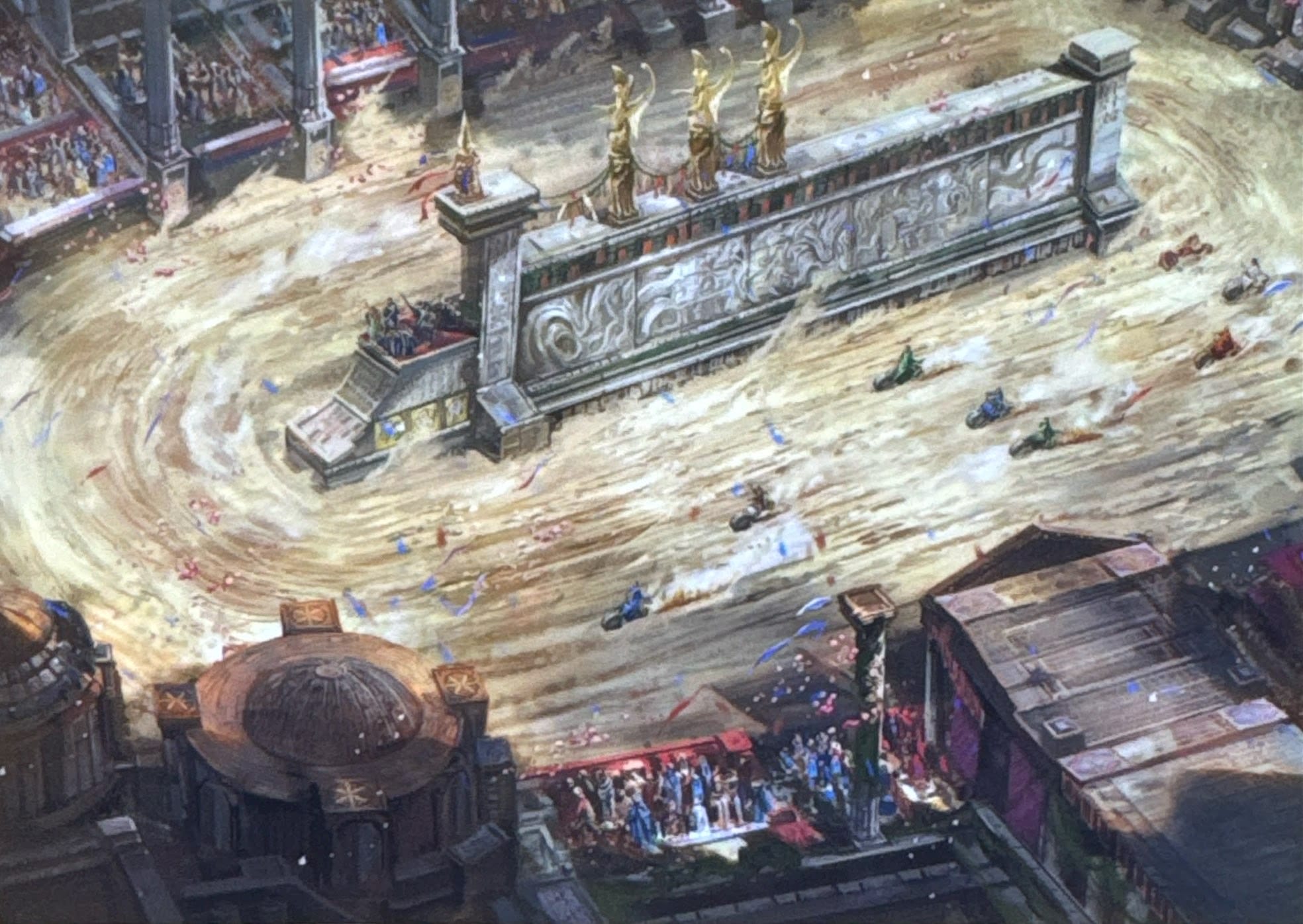
Several scenes remain stuck in my mind, but none more than the chariot race at the Circus Sciacca (Chapter 29). Political maneuvering pushes Vis into a high-stakes competition where teamwork, Will, and raw nerve collide. The setup is rich: two chariots per team, each person steer their own chariot while powering their partner's using Will, racing seven laps. Vis’s victory is exhilarating but it comes with a consequence that shapes the emotional and political fallout that will occur in Res later in the story.
Emotional Impact
For me, Luceum is the emotional anchor of the entire book. It feels untouched by the corruption and decay creeping into the other worlds. It gives Vis space to confront grief in a way that feels honest, painful, and ultimately healing. His interactions there, especially what feels like a reunion with his father, carry the most powerful emotional weight in the narrative.
Overall Evaluation
The Strength of the Few is a fantastic continuation of the Hierarchy series. It's bigger, deeper, more emotional, and full of surprises. I finished the book wanting to reread it immediately with a notebook beside me, mapping events across the three worlds. The layered mysteries, the lore of the Concurrence, the philosophical insights, and the character arcs all left me eager for the finale.
And hearing that Sony has secured movie rights? It's exciting and intimidating. I truly hope they can capture the scale, nuance, and beauty of this world.
Until then, I’ll be counting down the days to book three.